| Genesis | GOD CREATED |
| Genesis 1:1–5 | 🌟 Creation of Light |
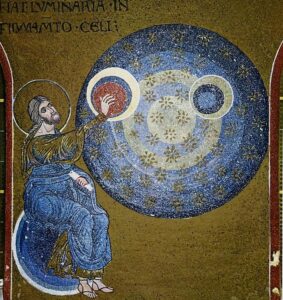
| Genesis 1:6–8 | 🌌 Creation of the Firmament / Sky |
| Genesis 1:9–13 | 🌍 Land, Seas & Plants |
| Genesis 1:14–19 | ☀️ Sun, Moon & Stars |
| Genesis 1:20–23 | 🐟 Birds & Sea Creatures |
| Genesis 1:24–25 | 🦁 Animals |
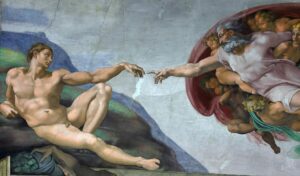
| Genesis 1:26–31 | 👤 Creation of Adam & Eve |
| Genesis 2–3 | 🌳 Garden of Eden |
The Catholic Church observes September 1 as the World Day of Prayer for the Care of Creation, a day dedicated to thanking God for the gift of creation and renewing the Church’s commitment to ecological stewardship.
What the Day Is
- An annual Catholic observance established by Pope Francis in 2015 as a concrete follow‑up to Laudato Si’.
- Shared with the Orthodox Church, which first designated September 1 as a creation‑focused day of prayer in 1989.
- The opening of the global Season of Creation, which runs from September 1 to October 4 (Feast of St. Francis of Assisi).
Purpose in Catholic Teaching
The day emphasizes core themes of Catholic ecological spirituality:
- Praise of God the Creator — recognizing creation as a gift entrusted to humanity.
- Ecological conversion — a call to examine how our lifestyles affect the earth and the poor.
- Solidarity with the vulnerable — environmental degradation disproportionately harms the poor, a point strongly emphasized in recent papal messages.
- Peace and justice — Pope Leo XIV’s 2026 message highlights how war and environmental destruction are intertwined, urging Christians to “beat swords into plowshares” and redirect human effort toward life and care for creation.
How It Is Celebrated
Catholic communities worldwide mark the day with:
- Masses and liturgies for the Care of Creation (including the newly approved Mass texts in English and Spanish).
- Prayer services and Holy Hours focused on creation.
- Educational events on Laudato Si’, environmental justice, and ecological conversion.
- Community actions such as clean‑ups, tree planting, or advocacy for environmental protection.
Significance
This day reinforces the Church’s teaching that caring for creation is not optional but part of living the Gospel. It flows from:
- The biblical mandate to “till and keep” the garden (Genesis 2:15).
- The moral duty to protect life and the poor.
- The Church’s broader mission to foster peace, justice, and the flourishing of all creation.
Genesis 1:1–2 — God creates from nothing
“In the beginning God created the heavens and the earth.”
Catholic teaching emphasizes that creation is good, ordered, and intentional — a gift from God.
Genesis 1:26–28 — Humanity’s vocation
“Fill the earth and subdue it; and have dominion…”
The Church teaches that “dominion” means responsible stewardship, not exploitation. Humans are caretakers, not owners.
Genesis 1:31 — Creation is good
“God saw everything that he had made, and behold, it was very good.”
This affirms the inherent goodness of creation and the moral duty to protect it.
Genesis 2:15 — Humanity as gardeners
“The Lord God took the man and put him in the garden… to till it and keep it.”
This is the foundational Catholic text for ecological responsibility: to cultivate and protect.
Genesis 9:12–17 — Covenant with all creation
“I establish my covenant… with every living creature.”
God’s covenant after the flood includes animals and the earth, showing creation’s dignity.
Protection of Nature & Stewardship (Other Scriptures)
Psalm 24:1 — Creation belongs to God
“The earth is the Lord’s and all that is in it.”
Humans are stewards, not owners.
Psalm 104 — God’s care for creation
“O Lord, how manifold are your works.”
A poetic celebration of ecosystems, animals, water, and the harmony of creation.
Psalm 148 — Creation praises God
“Praise him, sun and moon… mountains and hills.”
Creation itself is a choir of praise, reminding us to protect what glorifies God.
Wisdom 11:24–26 — God loves all He created
“You love all things that exist.”
Catholic theology uses this to affirm the value of every creature.
Sirach 42:23 — God’s providence
“All things are in pairs, one opposite the other.”
A reminder of the balance and harmony in creation.
Isaiah 24:4–6 — Sin harms the earth
“The earth mourns… because they have transgressed the laws.”
Environmental destruction is linked to moral disorder.
Jeremiah 2:7 — Warning against environmental abuse
“You defiled my land.”
A prophetic critique of ecological irresponsibility.
Hosea 4:1–3 — Creation suffers from human sin
“The land mourns… even the fish of the sea are perishing.”
A powerful text showing how moral evil leads to ecological collapse.
Romans 8:19–23 — Creation longs for redemption
“Creation waits with eager longing…”
Catholic teaching sees creation as part of God’s saving plan, awaiting renewal.
Revelation 21:1 — New creation
“Then I saw a new heaven and a new earth.”
The final destiny of creation is restoration, not destruction.
Catholic Teaching: Humanity Created Male and Female
Catholic Doctrine The Catholic Church teaches that human sex is a gift from God, created as male and female. This truth comes from Sacred Scripture, Sacred Tradition, and the Magisterium.
Human sexual identity is understood as a unity of body and soul, and biological sex is part of the God‑given identity of each person.
Catechism of the Catholic Church CCC 2331 teaches that “God created man in his own image… male and female he created them.”
CCC 2333 teaches that each person should “acknowledge and accept his sexual identity.”
CCC 369–372 explains that man and woman are equal in dignity, distinct, and created for communion.
Biblical Foundations
Genesis 1:27
“Male and female he created them.” This passage is the foundation of Catholic teaching on the two sexes willed by God.
Genesis 2:23–24
“This at last is bone of my bones… therefore a man leaves his father and mother and cleaves to his wife.”
This reveals the complementarity of man and woman and their vocation to communion.
Genesis 5:2 “He created them male and female, and blessed them.” Sexual identity is shown as divinely instituted.
Matthew 19:4 “He who made them from the beginning made them male and female.” Jesus Himself reaffirms the two‑sex nature of humanity.
Ephesians 5:31–32 “The two shall become one flesh.”
St. Paul teaches that sexual difference reveals a theological mystery: Christ’s love for the Church.
How the Church Understands This Teaching Today Sex is biological and God‑given. The Church rejects the idea that sex is merely psychological or self‑defined.
Men and women share equal dignity. Difference does not imply inequality. Sexual difference is for communion. Man and woman together image God in a unique way.
The Church distinguishes sex from gender ideology, affirming compassion for all people while rejecting ideologies that deny the reality of the two sexes.
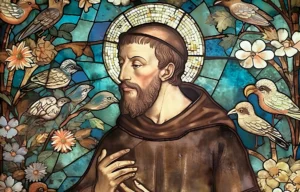
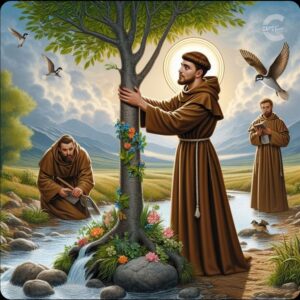
St. Francis of Assisi and Nature
St. Francis of Assisi is one of the most significant figures in Catholic tradition regarding the relationship between humanity and the natural world. Catholic teaching presents Francis not as a romanticized environmental figure, but as a saint whose love for creation flows directly from his love for God and his sacramental understanding of the world. His reverence for nature is rooted in Scripture, medieval Christian spirituality, and his own profound mystical insight.
Francis consistently wrote about created things in a positive and joyful way. He saw God reflected in creation, worshipped God through creation, and gave thanks for creation. This sacramental view aligns with biblical traditions such as Psalm 148, where creation itself is depicted as praising God. Scholars note that Francis continued long‑standing Christian practices of praising God through creation, speaking of creatures as praising God, and exhorting them to glorify Him.
Francis’ originality lies in the depth of his nature mysticism and his familial language for creation—calling the sun “Brother,” the moon “Sister,” and even referring to “Sister Death.” His Canticle of the Creatures expresses this spiritual vision, celebrating the goodness and beauty of creation as gifts from a generous God. Experts emphasize that Francis’ spirituality highlighted the communion between God and creatures in Jesus Christ, seeing all things as bearing the stamp of the Word through whom they were created.
Modern portrayals sometimes misinterpret Francis as a pantheist or a purely ecological figure. In reality, he remained firmly rooted in Catholic faith. When he contemplated nature, he saw not independent spirits or powers but a complex, interrelated creation reflecting God’s splendor, generosity, and goodness. His reverence for creation must be understood in its 13th‑century Christian context, where he both inherited and transcended earlier traditions. Scholars show that while Francis drew from monastic and biblical precedents, his nature mysticism, familial language for creation, and deep sense of kinship with creatures were uniquely his own.
This profound love for God’s creation led Pope St. John Paul II in 1979 to declare Francis the patron saint of ecology, recognizing that his joyful reverence for creation speaks powerfully to the Church’s contemporary call to care for the environment
|
1st of September Word Day of the Care of Creation in Catholic Teachings |
https://saintmichaelusa.org/creation |
Key Catholic Saints Connected to Nature
St. Francis of Assisi The most well‑known patron of ecology. He praised God through creation, called creatures “brother” and “sister,” and wrote the Canticle of the Creatures. Often depicted with birds, animals, sunlight, and natural landscapes.
St. Hildegard of Bingen Doctor of the Church known for her theology of creation, herbal medicine, and writings on the harmony of nature. Images often show plants, herbs, or cosmic symbolism.
| Saint Hildegard of Bingen 17th September | https://saintmichaelusa.org/0917-St-Hildegard-of-Binger |
St. Kateri Tekakwitha Patroness of ecology and the environment. Known for her deep love of the natural world and her life lived close to the land. Often shown outdoors or surrounded by natural elements.
| St Kateri Tekakwitha 14th July | https://saintmichaelusa.org/0714-st-kateri-tekakwitha/ |
St. Benedict Connected to agriculture and stewardship through monastic life. Benedictine spirituality emphasizes work, land care, and creation. Images sometimes include plants or rural settings.
| St Benedict 11th July | https://saintmichaelusa.org/0711-st-benedict/ |
St. Isidore the Farmer Patron saint of farmers and rural communities. Often depicted with fields, crops, or animals.
| St. Isidore the Farmer 15th May | https://saintmichaelusa.org/0515-St-Isidore-Farmer |
St. Barbara Associated with storms, lightning, and natural forces.
| St Barbara 4th December | https://saintmichaelusa.org/1204-St-Barbara |


Stay connected — subscribe today
https://www.youtube.com/@st.michaelusa
SIGN UP SO YOU CAN GET A BLESSING !

https://stmichaelcenter.flocknote.com/StMichaelCenter
MAKE A DONATION SUPPORT YOUTH & ACTIVITIES

https://saintmichaelusa.org/make-a-donation
FOLLOW US ON FACEBOOK !