The phrase “Crisis of the Catholic Church” usually refers not to one single problem, but to a cluster of deep challenges—spiritual, cultural, demographic, and institutional—that are shaping Catholic life today.
- Christ’s promise to Peter: “You are Peter, and upon this rock I will build my Church” (Matthew 16:18)
- Peter’s role as shepherd of the universal Church
- The unity of the Church under the successor of Peter, the Pope
Simon Becomes Peter: Matthew 16:13-20
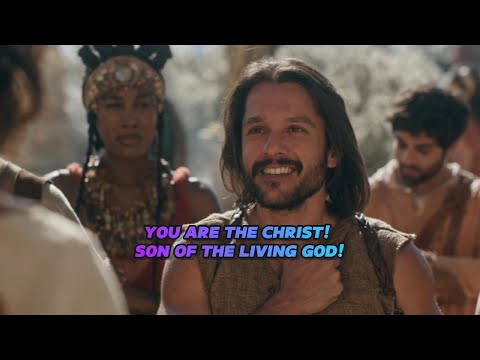
 https://youtu.be/QhRnZUVKpRA
Peter’s Confession About Jesus.*MT.16
13h When Jesus went into the region of Caesarea Philippi* he asked his disciples, “Who do people say that the Son of Man is?”
14i They replied, “Some say John the Baptist,* others Elijah, still others Jeremiah or one of the prophets.”
15 He said to them, “But who do you say that I am?”
16* j Simon Peter said in reply, “You are the Messiah, the Son of the living God.”
17 Jesus said to him in reply, “Blessed are you, Simon son of Jonah. For flesh and blood* has not revealed this to you, but my heavenly Father.
18k And so I say to you, you are Peter, and upon this rock I will build my church,* and the gates of the netherworld shall not prevail against it.
19l I will give you the keys to the kingdom of heaven.* Whatever you bind on earth shall be bound in heaven; and whatever you loose on earth shall be loosed in heaven.”
Judas Iscariot — Catholic Scripture Summary
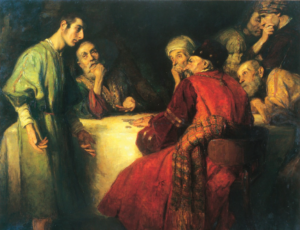
One of the Twelve Apostles
Judas Iscariot was one of the twelve apostles chosen by Jesus Christ. He shared in the ministry of Jesus and traveled with Him during His public mission.
Scripture notes that Judas also served as the keeper of the money bag for the group.
“He was a thief, and as he had the money box he used to take what was put into it.”
— John 12:6
His Growing Greed and Disloyalty
The Gospels suggest that Judas’ heart gradually turned away from Jesus. When a woman anointed Jesus with expensive perfume, Judas objected—not out of concern for the poor, but because of greed (John 12:4–6).
This inner corruption prepared the way for betrayal.
Scripture says:
“Then Satan entered into Judas called Iscariot, who was of the number of the Twelve.”
— Luke 22:3
The Betrayal for Thirty Pieces of Silver
Judas went to the chief priests and agreed to betray Jesus.
“What will you give me if I deliver him to you?”
— Matthew 26:15
They paid him thirty pieces of silver, fulfilling the prophecy in Zechariah (Zechariah 11:12–13).
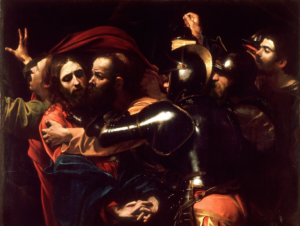
The Kiss in the Garden
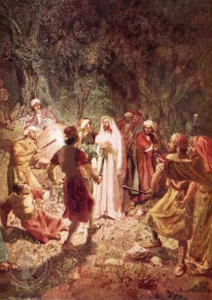
During the night in the Garden of Gethsemane, Judas led soldiers to arrest Jesus.
He identified Jesus with a kiss:
“The one I shall kiss is the man; seize him.”
— Matthew 26:48
This act became known in Christian history as the “kiss of betrayal.”
Remorse and Death
After seeing Jesus condemned, Judas felt remorse and tried to return the money to the temple authorities.
“I have sinned in betraying innocent blood.”
— Matthew 27:4
The priests refused the money. Judas threw the silver into the temple and went away and hanged himself (Matthew 27:5).
The money was later used to buy the Potter’s Field, called the Field of Blood.
Judas in the Early Church
After the death of Judas, the apostles chose a replacement so that the number of the Twelve would remain complete.
The new apostle chosen was:
- Matthias (Acts 1:26)
Catholic Reflection
In Catholic teaching, Judas represents a profound warning about:
- The danger of greed
- The tragedy of betraying Christ
- The consequences of despair instead of repentance
His story reminds believers that even those close to Christ must remain faithful and trust in God’s mercy.
LITANY FOR THE CHURCH IN OUR TIME
Lord, have mercy on us,. (R)
Christ, have mercy on us,. (R)
Lord, have mercy on us,. (R)
Christ, Divine Founder of the Church, hear us.
Christ, Who warned of false prophets, graciously hear us.
God, the Father of Heaven, have mercy on us.
God, the Son, Redeemer of the World, have mercy on us.
God, the Holy Ghost, have mercy on us.
Holy Trinity, one God, have mercy on us.
Holy Mary, Mother of the Church, pray for us.
St. Joseph, Patron of the Universal Church, pray for us.
St. Michael, Defender in the Day of Battle, pray for us.
St. Peter, the Rock upon which Christ built His Church, pray for us.
St. Paul, Protector of the Faithful Remnant, pray for us.
St. Francis of Assisi, re-builder of the Church, pray for us.
St. Anthony, Hammer of Heretics, pray for us.
St. Pius V, Restorer of the beauty of the Sacred Liturgy,pray for us.
St. Pius X, Foe of Modernism, pray for us.
All you Holy Angels and Archangels, pray that we may resist the snares of the devil.
St. Catherine of Siena, pray that Christ’s Vicar may oppose the spirit of the world.
St. John Fisher, pray that the bishops may have the courage to combat heresy and irreverence.
St. Francis Xavier, pray that zeal for souls may be re-enkindled in the clergy.
St. Charles Borromeo, pray that seminaries may be protected from false teachings.
St. Vincent De Paul, pray that seminarians may return to a life of prayer and meditation.
St. Therese of the Child Jesus, pray that religious may
re-discover their vocation of love and sacrifice.
St. Thomas More, pray that the laity may not succumb to the Great Apostasy.
St. Francis de Sales, pray that the Catholic Press may again become a vehicle of Truth.
St. John Bosco, pray that our children may be protected from immoral and heretical instruction.
St. Pascal Baylon, pray that profound reverence for the Most Blessed Sacrament may be restored.
St. Dominic, pray that we may ever treasure the Holy Rosary.
Lamb of God, Who taketh away the sins of the world,
spare us, O Lord.
Lamb of God, Who taketh away the sins of the world,
graciously hear us, O Lord.
Lamb of God, Who taketh away the sins of the world,
have mercy on us.
Let us Pray:
Jesus our God, in these dark hours, when Thy Mystical Body is undergoing its own Crucifixion, and when it would almost seem to be abandoned by God the Father, have mercy, we beg Thee, on Thy suffering Church. Send down upon us the Divine Consoler to enlighten our minds and strengthen our wills. Thou, O Second Person of the Most Blessed Trinity, Who canst be deceived and Who hast promised to be with Thy Church until the End of Time, grant us a mighty faith, that we may not falter, help us to do Thy Holy Will at all times, especially during these hours of grief and uncertainty. May Thy Most Sacred Heart and the Immaculate and Sorrowful Heart of Thy Holy Mother be our sure refuge in time and in eternity.
Amen.
The Prophecies of the Crisis in the Catholic Church
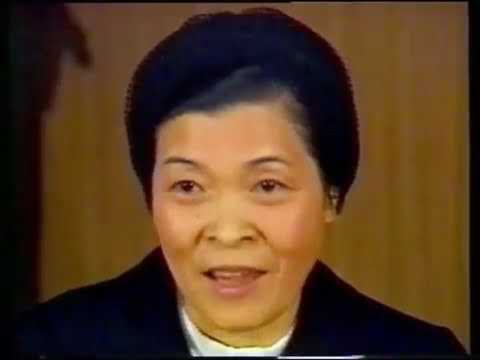
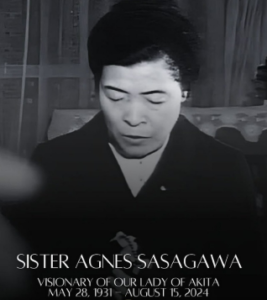
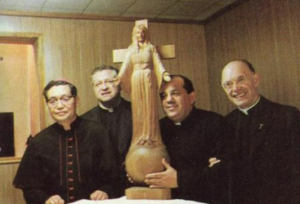
The Apparitions of the Blessed Virgin Mary in Akita, Japan,
to Sr. Agnes Sasagawa
History of Our Lady of Akita
On June 12, 1973, Sr. Agnes Sasagawa was praying in her convent in Akita, Japan, when she saw brilliant rays of light that emanated from the tabernacle. The same miracle happened again over the next two days. On June 28, a cross-shaped wound appeared on the palm of Sr. Agnes’ left hand. It bled profusely and caused her much pain.
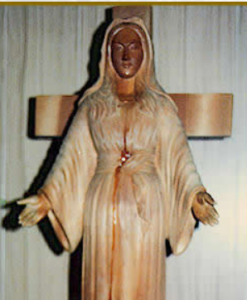
On July 6, while she was praying, Sr. Agnes heard a voice come from the statue of the Virgin Mary that was in the chapel. It was the first message. The same day, some sisters discovered drops of blood that were flowing from the right hand of the statue. This flow of blood occurred four times. The wound on the hand of the statue remained until September 29. But that same day, the statue began to “sweat”, especially from her forehead and neck.
On August 3, 1973, Sr. Agnes received a second message and on October 13 of the same year, the third and final message. On January 4, 1975, the statue of Our Lady began to cry and continued crying on different occasions for 6 years and 8 months. The last time was on September 15, 1981, the feast of Our Lady of Sorrows. There were a total of 101 lacrimation.
The name of the visionary, Sister “Agnes”, means lamb. She was healed of deafness, which was verified with no medical explanation. This miracle was a sign of the authenticity of the visits of Our Lady.
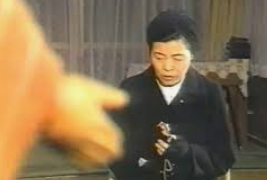
The extraordinary events began on June 12, 1973, when Sr. Agnes saw brilliant mysterious rays emanate suddenly from the tabernacle. The same thing happened on each of the two days that followed.
On June 28, 1973, a cross-shaped wound appeared on the inside left hand of Sr. Agnes. It bled profusely and caused her much pain. On July 6, Sr. Agnes heard a voice coming from the statue of the Blessed Virgin Mary in the chapel where she was praying. The statue was carved from a single block of wood from a Katsura tree and is three feet tall. On the same day, a few of the sisters noticed drops of blood flowing from the statue’s right hand. On four occasions, this act of blood flow repeated itself. The wound in the statue’s hand remained until September 29, when it disappeared. On September 29, the day the wound on the statue disappeared, the sisters noticed the statue had now begun to “sweat”, especially on the forehead and neck. On August 3, Sr. Agnes received a second message. On October 13, she received a final third message.
Two years later on January 4, 1975, the statue of the Blessed Virgin began to weep. It continued to weep at intervals for the next 6 years and eight months. It wept on 101 occasions.
The Messages to Sr. Agnes
July 6, 1973
“My daughter, my novice, you have obeyed me well in abandoning all to follow me. Is the infirmity of your ears painful? Your deafness will be healed, be sure. Does the wound of your hand cause you to suffer? Pray in reparation for the sins of men. Each person in this community is my irreplaceable daughter. Do you say well the prayer of the Handmaids of the Eucharist? Then, let us pray it together.”
“Most Sacred Heart of Jesus, truly present in Holy Eucharist, I consecrate my body and soul to be entirely one with Your Heart, being sacrificed at every instant on all the altars of the world and giving praise to the Father pleading for the coming of His Kingdom.”
“Please receive this humble offering of myself. Use me as You will for the glory of the Father and the salvation of souls.”
“Most holy Mother of God, never let me be separated from Your Divine Son. Please defend and protect me as Your Special Child. Amen.”
When the prayer was finished, the Heavenly Voice said: “Pray very much for the Pope, Bishops, and Priests. Since your Baptism you have always prayed faithfully for them. Continue to pray very much…very much. Tell your superior all that passed today and obey him in everything that he will tell you. He has asked that you pray with fervor.”
August 3, 1973
“My daughter, my novice, do you love the Lord? If you love the Lord, listen to what I have to say to you.”
“It is very important…You will convey it to your superior.”
“Many men in this world afflict the Lord. I desire souls to console Him to soften the anger of the Heavenly Father. I wish, with my Son, for souls who will repair by their suffering and their poverty for the sinners and ingrates.”
“In order that the world might know His anger, the Heavenly Father is preparing to inflict a great chastisement on all mankind. With my Son I have intervened so many times to appease the wrath of the Father. I have prevented the coming of calamities by offering Him the sufferings of the Son on the Cross, His Precious Blood, and beloved souls who console Him forming a cohort of victim souls. Prayer, penance and courageous sacrifices can soften the Father’s anger. I desire this also from your community…that it love poverty, that it sanctify itself and pray in reparation for the ingratitude and outrages of so many men.
Recite the prayer of the Handmaids of the Eucharist with awareness of its meaning; put it into practice; offer in reparation (whatever God may send) for sins. Let each one endeavor, according to capacity and position, to offer herself entirely to the Lord.”
“Even in a secular institute prayer is necessary. Already souls who wish to pray are on the way to being gathered together. Without attaching to much attention to the form, be faithful and fervent in prayer to console the Master.”
After a silence:
“Is what you think in your heart true? Are you truly decided to become the rejected stone? My novice, you who wish to belong without reserve to the Lord, to become the spouse worthy of the Spouse, make your vows knowing that you must be fastened to the Cross with three nails. These three nails are poverty, chastity, and obedience. Of the three, obedience is the foundation. In total abandon, let yourself be led by your superior. He will know how to understand you and to direct you.”
October 13, 1973
“My dear daughter, listen well to what I have to say to you. You will inform your superior.”
After a short silence:
“As I told you, if men do not repent and better themselves, the Father will inflict a terrible punishment on all humanity. It will be a punishment greater than the deluge, such as one will never seen before. Fire will fall from the sky and will wipe out a great part of humanity, the good as well as the bad, sparing neither priests nor faithful. The survivors will find themselves so desolate that they will envy the dead. The only arms which will remain for you will be the Rosary and the Sign left by My Son. Each day recite the prayers of the Rosary. With the Rosary, pray for the Pope, the bishops and priests.”
“The work of the devil will infiltrate even into the Church in such a way that one will see cardinals opposing cardinals, bishops against bishops. The priests who venerate me will be scorned and opposed by their confreres…churches and altars sacked; the Church will be full of those who accept compromises and the demon will press many priests and consecrated souls to leave the service of the Lord.
“The demon will be especially implacable against souls consecrated to God. The thought of the loss of so many souls is the cause of my sadness. If sins increase in number and gravity, there will be no longer pardon for them”
“With courage, speak to your superior. He will know how to encourage each one of you to pray and to accomplish works of reparation.”
“It is Bishop Ito, who directs your community.”
And She smiled and then said:
“You have still something to ask? Today is the last time that I will speak to you in living voice. From now on you will obey the one sent to you and your superior.”
“Pray very much the prayers of the Rosary. I alone am able still to save you from the calamities which approach. Those who place their confidence in me will be saved.”
History of Ecclesiastical Approval
February 27, 1978 — Pope Paul VI approves the Congregation for the Doctrine of the Faith’s Norms of the Congregation for Proceeding in Judging Alleged Apparitions and Revelations. These norms provide the criteria for evaluating such phenomenon and establish the local Ordinary as the competent authority to do so. They also provide that regional or national episcopal conferences may intervene (as has occurred with regards to Medjugorje) if warranted, as may the Holy See.
April 22, 1984 — After eight years of investigations, Rev. John Shojiro Ito, Bishop of Niigata, Japan, recognizes “the supernatural character of a series of mysterious events concerning the statue of the Holy Mother Mary” and authorizes “throughout the entire diocese, the veneration of the Holy Mother of Akita, while awaiting that the Holy See publishes definitive judgment on this matter.”
Letter of Bishop Ito recognizing the events at Akita
Ecclesiastical Approval of the Statue’s Tears and the Messages
On April 22, 1984, after eight years of investigation and having consulted with the Holy See, the messages of Our Lady of Akita were approved by the bishop of the Diocese of Niigata, Japan, Bishop John Shojiro Ito. He declared that the events of Akita are of supernatural origin and authorized the veneration of the Holy Mother of Akita in the whole diocese. In the Japanese town of Akita, a statue of the Madonna has shed blood, sweat and tears according to the testimony of more than 500 Christians and non-Christians, including the Buddhist mayor of the town. A religious, Agnes Katsuko Sasagawa has received the stigmata and messages from Our Lady.
In June of 1988, Joseph Cardinal Ratzinger, Prefect of the Congregation for the Doctrine of the Faith, imparted the definitive judgment regarding the events and messages of Akita, judging them to be trustworthy and worthy of faith. The Cardinal observed that Akita is a continuation of the messages of Fatima.
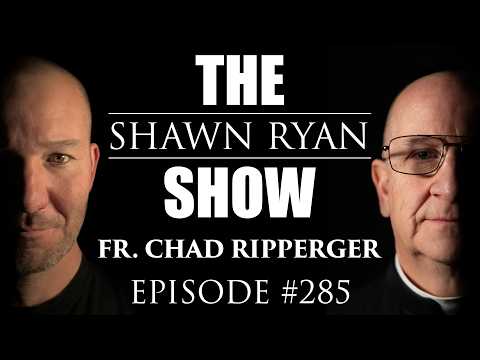
Fr. Chad Rippinger – Shawn Ryan Interview – Infiltration of the Catholic Church
OUR LADY OF AKITA JAPAN 1973
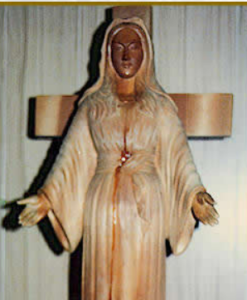
“The work of the devil will infiltrate even into the Church in such a way that one will see cardinals opposing cardinals, bishops against bishops. The priests who venerate me will be scorned and opposed by their confreres…churches and altars sacked; the Church will be full of those who accept compromises and the demon will press many priests and consecrated souls to leave the service of the Lord.
“The demon will be especially implacable against souls consecrated to God. The thought of the loss of so many souls is the cause of my sadness. If sins increase in number and gravity, there will be no longer pardon for them”
Pope Paul VI — “The Smoke of Satan”
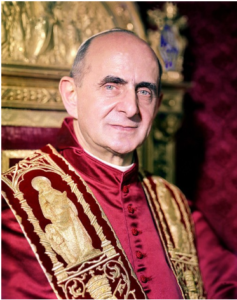
The famous phrase “the smoke of Satan has entered the Church”
comes from a homily given by Pope Paul VI on June 29, 1972, the Feast of Saints Peter and Paul.
The Quote
In Italian he said:
“We believed that after the Council would come a day of sunshine for the history of the Church. Instead there came a day of clouds, of storm, of darkness… from some fissure the smoke of Satan has entered the temple of God.”
What He Meant
The Pope was speaking about the confusion and crisis inside the Church after the Second Vatican Council (Second Vatican Council).
He was referring to problems he saw spreading within the Church, including:
- Doctrinal confusion
- Loss of faith and discipline
- Disobedience to Church authority
- Liturgical abuses
- Internal divisions and criticism of the Church
Paul VI believed that evil influences and spiritual confusion were affecting the Church, symbolically describing it as “the smoke of Satan.”
Important Clarification
He was not saying Satan literally entered the Church, but using a spiritual metaphor to describe:
- deception
- doubt
- ideological confusion
- weakening of faith
He warned that these forces were obscuring the clarity of Catholic teaching and faith.
Context of the Time
The late 1960s and early 1970s saw major upheavals:
- The 1960s cultural revolution
- Decline in priestly and religious vocations
- The controversy around Humanae Vitae
- Liturgical experimentation after Vatican II
- Many priests and religious leaving their vocations
Paul VI was deeply troubled by these developments.
His Final Message
Despite the warning, Paul VI also insisted that Christ remains with His Church, and that the Church would ultimately overcome the crisis.
How Later Popes Interpreted the Warning About “The Smoke of Satan”
When Pope Paul VI warned in 1972 that “the smoke of Satan has entered the temple of God,” he was speaking about confusion, error, and spiritual crisis affecting the Church after the Second Vatican Council. Later popes did not repeat the exact phrase often, but they clearly acknowledged the same spiritual struggle and interpreted the crisis in their own ways.
Pope John Paul II — A Spiritual Battle in the Modern World
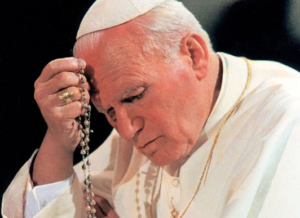
Pope John Paul II understood the crisis described by Paul VI as part of a larger spiritual conflict between the Gospel and the modern culture of sin.
His Key Interpretations
A “culture of death” spreading in society
In his encyclical Evangelium Vitae, he warned that modern society was developing structures hostile to life and truth.
He wrote that humanity was facing:
- attacks on the sanctity of life
- moral relativism
- rejection of God
These forces, he believed, were spiritual darkness affecting both society and the Church.
The Church under spiritual attack
John Paul II frequently spoke about spiritual warfare and the activity of evil in history.
In 1976, before becoming pope, he said:
“We are now standing in the face of the greatest historical confrontation humanity has gone through.”
He believed the crisis Paul VI described was part of this battle between the Gospel and anti-Christian ideologies.
The solution: holiness and the New Evangelization
John Paul II’s response was:
- renewal of faith
- the New Evangelization
- devotion to the Eucharist and Mary
- strengthening Catholic identity
John Paul II saw the crisis after Vatican II as part of a spiritual struggle affecting the whole world.
“The Final Confrontation”
In 1976, shortly before becoming pope, he said:
“We are now facing the final confrontation between the Church and the anti-Church, between the Gospel and the anti-Gospel.”
He believed the modern age was producing powerful forces opposed to Christian truth.
Crisis of Faith
John Paul II warned that many Christians were losing clarity about Catholic teaching.
He spoke about:
- relativism
- secular ideologies
- weakening of moral teaching
- confusion among believers
This was one reason he launched the New Evangelization.
“The Church Must Begin Again From Christ”
In the Jubilee Year 2000 he emphasized that renewal would not come from structures or reforms alone.
Instead:
“The Church must start afresh from Christ.”
His answer to the crisis was:
- holiness
- strong catechesis
- devotion to the Eucharist
- missionary evangelization
Pope Benedict XVI — The “Dictatorship of Relativism”
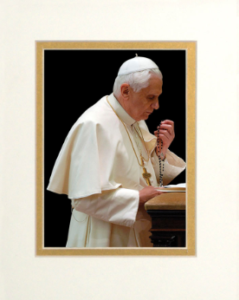
Pope Benedict XVI, who lived through the post-Vatican II turmoil as a theologian and bishop, interpreted Paul VI’s warning mainly as a crisis of truth and faith.
His Key Interpretations
Relativism weakening faith
Before his election in 2005, he famously warned about the rise of the: “dictatorship of relativism”
Relativism means believing there is no objective truth, which Benedict believed leads to:
- confusion about doctrine
- moral chaos
- weakening of Christian identity
This, in his view, was one way the “smoke” of confusion spreads.
Crisis inside the Church
Benedict openly admitted that serious problems had entered the Church, including scandals and internal dissent.
He said in 2010:
“The greatest persecution of the Church comes not from enemies outside, but is born from sin within the Church.”
This echoed the concern of Paul VI about internal corruption and confusion.
The remedy: returning to truth and liturgy
Benedict believed renewal required:
- faithful teaching of doctrine
- reverent liturgy and worship
- deeper encounter with Christ
- intellectual defense of the faith
What Both Popes Agreed On
Both Pope John Paul II and Pope Benedict XVI understood Paul VI’s warning in a similar way.
They believed the “smoke” referred to:
- moral relativism
- loss of faith
- confusion about Catholic teaching
- internal sin and scandal
- secular ideologies entering Christian culture
But both also insisted that:
- Christ remains with His Church
- the Church will endure despite crises
- renewal always comes through holiness and truth
Strong Statements on the Post-Vatican II Crisis
Both Pope John Paul II and Pope Benedict XVI openly acknowledged that the period after the Second Vatican Council brought serious confusion and turmoil inside the Church. While both defended the Council itself, they warned about misinterpretations and internal crises that followed it.
Before and during his papacy, Benedict XVI often spoke about the “crisis of interpretation” after Vatican II.
“The Council of the Media vs. the Real Council”
In 2012 he explained that two different versions of the Council emerged:
“There was the Council of the Fathers—the real Council—
and there was the Council of the media, which created many problems.”
He said the media portrayed the Council as if it meant:
- abandoning tradition
- changing doctrine
- reinventing the Church
But the actual Council documents did not teach that.
“The Greatest Persecution Comes From Sin Within”
In 2010 Benedict made one of the strongest statements about the crisis in the Church:
“The greatest persecution of the Church comes not from enemies outside, but is born from sin within the Church.”
He was speaking particularly about scandals and moral failures that harmed the credibility of the Church.
“Hermeneutic of Rupture”
In a major 2005 address to the Roman Curia, Benedict warned about what he called the “hermeneutic of rupture.”
This meant interpreting Vatican II as:
- a break with the past
- a new Church replacing the old one
He insisted instead on a “hermeneutic of continuity”—meaning the Council must be understood in continuity with the Church’s tradition.
What These Popes Agreed On
Both popes made clear points:
1. Vatican II itself was not the problem.
The crisis came largely from misinterpretation and misuse of the Council.
2. The Church experienced real internal turmoil after the 1960s, including:
- doctrinal confusion
- loss of vocations
- liturgical abuses
- moral scandals
3. Renewal must come from returning to Christ and authentic Catholic teaching.
The Vision of Satan and the Church — Pope Leo XIII
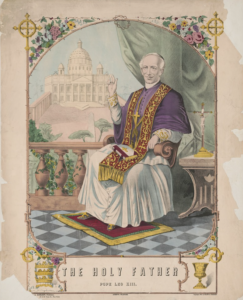
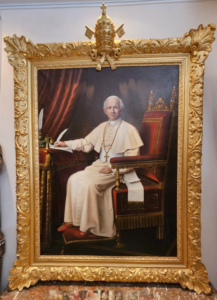
One of the most striking traditions in modern Catholic history is the vision experienced by Pope Leo XIII that led to the famous Prayer to Saint Michael the Archangel.
Although the precise details come from later testimonies, the story has been widely repeated in Catholic circles.
What Happened
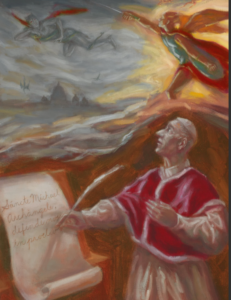
According to accounts from Vatican sources and Leo XIII’s secretary, the event occurred around October 13, 1884 after the pope had finished celebrating Mass in the Vatican.
As he was leaving the altar, the pope suddenly stopped and appeared transfixed, staring into space for several minutes. Witnesses said his face looked pale and disturbed.
Afterward he went immediately to his office and composed the Prayer to St. Michael.
The Reported Vision
Later descriptions claim the pope heard two voices in a mystical conversation:
- the voice of Christ
- the voice of Satan
In the dialogue, Satan supposedly boasted that he could destroy the Church if he were given enough time and power.
Satan asked for:
- about 100 years
- greater influence over those who would serve the Church
Christ then allowed this period as a test.
This alleged conversation is the reason many Catholics connect the vision to the intense spiritual struggles of the 20th century.
The Prayer to Saint Michael
After the experience, Leo XIII composed the famous prayer to Saint Michael the Archangel:
“Saint Michael the Archangel, defend us in battle.
Be our protection against the wickedness and snares of the devil…”
Leo XIII ordered that this prayer be said after every Low Mass throughout the world.
For decades Catholics would hear the priest and congregation pray it together at the end of Mass.
Later Connections Made by Catholics
Some Catholics later connected this vision to major events that followed:
- World War I
- World War II
- the rise of atheistic communism
- persecution of Christians
- internal crises within the Church
This connection is interpretive, but it is often discussed alongside the warning of Pope Paul VI about “the smoke of Satan” entering the Church.
Important Historical Note
The Prayer to Saint Michael is historically certain, but the exact dialogue between Christ and Satan is based on later accounts, not an official papal document.
However, many Catholics still view the story as a powerful reminder of spiritual warfare and the need for prayer.
Vision of Pope Leo XIII |
https://www.etsy.com/listing/1385275312/vision-of-pope-leo-xiii-matted-giclee
St. Michael the Archangel, defend us in battle; be our safeguard against the wickedness and snares of the devil. May God rebuke him, we humbly pray. And do you, O prince of the heavenly host, by the power of God, cast into Hell Satan and all the evil spirits who prowl about the world seeking the ruin of souls. Amen
MODERNISM
PASCENDI DOMINICI GREGIS
ENCYCLICAL OF POPE ST. PIUS X
ON THE DOCTRINES OF THE MODERNISTS
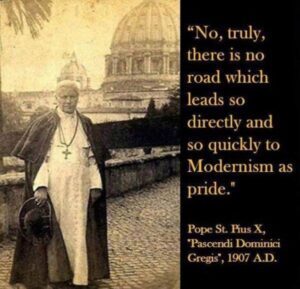
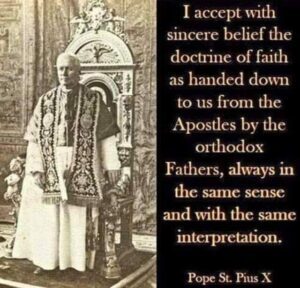
What Was It About?
In simple terms, Pope St. Pius X was alarmed by a growing movement inside the Church — scholars, theologians, and priests who were trying to reinterpret Catholic teaching through the lens of modern philosophy and science. He called this movement “Modernism” and condemned it as “the synthesis of all heresies” — meaning it wasn’t just one error, but a whole system of errors bundled together.
The Big Problems He Identified
1. “We can’t really know God through reason”
Modernists were influenced by the idea that human reason alone can’t reach God or supernatural truth. Pope St. Pius X said: that’s dangerous, because if reason can’t know God, then faith gets reduced to nothing more than a personal feeling or emotion — not objective truth.
2. “Religion is just a feeling inside you”
Modernists argued that faith comes from a deep inner need for God, not from God actually revealing Himself to us. Pope St. Pius X rejected this completely. He taught that faith is a response to God’s real, objective Revelation — not just something we invent inside ourselves.
3. “Dogmas change over time”
Modernists believed Church doctrines are just symbolic expressions of religious experience, and since experience evolves, dogmas should evolve too. Pope St. Pius X said: No. Revealed truth doesn’t change. Doctrine can be explained more deeply over time, but the core truth stays the same.
4. “The Bible is just a human document”
Some Modernist scholars were treating the Bible purely as a historical/literary text — separating the “Jesus of history” (what scholars could prove) from the “Christ of faith” (what the Church teaches). Pope St. Pius X insisted that Scripture and Tradition together are the Word of God, not merely human literature.
What Did Pope St. Pius X Do About It?
He didn’t just complain — he prescribed concrete fixes:
- Thomistic philosophy (the classical thought of St. Thomas Aquinas) was mandated as the foundation of all seminary education
- Bishops were told to watch for Modernist teaching in their dioceses and remove sympathizers from teaching roles
- In 1910, Pope St. Pius X followed up with an Anti-Modernist Oath that all clergy, seminary professors, and Church officials had to swear — affirming the Church’s traditional teachings
The Bottom Line
| Modernist View | St Pope Pius X’s Response |
| We can’t know God through reason | Reason and faith work together; God can be known |
| Faith is a personal inner feeling | Faith is a response to God’s real Revelation |
| Dogmas must evolve with the times | Truth doesn’t change; only our understanding deepens |
| The Bible is just a human record | Scripture is the inspired Word of God |
| The Church must adapt to modern philosophy | The Church guards a divine deposit of faith |
Dancing in the Church
Why pastors must address politics


Stay connected — subscribe today
https://www.youtube.com/@st.michaelusa
SIGN UP SO YOU CAN GET A BLESSING !
https://stmichaelcenter.flocknote.com/StMichaelCenter
FOLLOW US ON FACEBOOK !

https://www.facebook.com/StMichaelCenter/
MAKE A DONATION SUPPORT YOUTH & ACTIVITIES