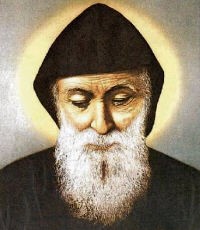
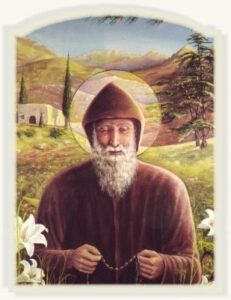
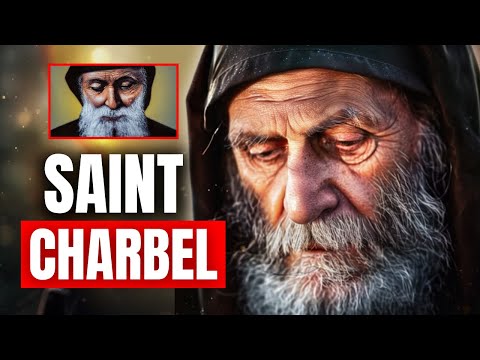
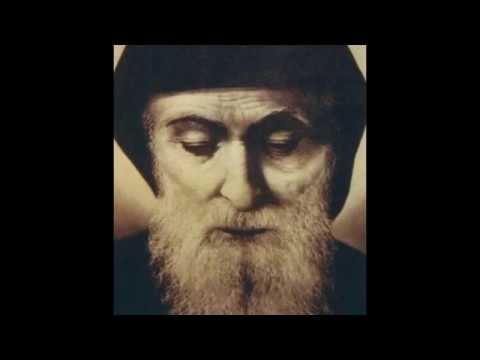
Joseph Zaroun Maklouf was raised by an uncle because his father, a mule driver, died when Joseph was only three. At the age of 23, Joseph joined the Monastery of St. Maron at Annaya, Lebanon, and took the name Sharbel in honor of a second-century martyr. He professed his final vows in 1853, and was ordained six years later.
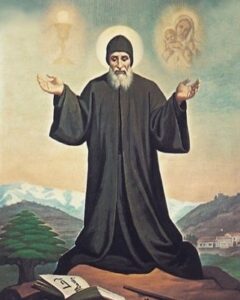
Following the example of the fifth-century Saint Maron, Sharbel lived as a hermit from 1875, until his death. His reputation for holiness prompted people to seek him to receive a blessing and to be remembered in his prayers. He followed a strict fast and was very devoted to the Blessed Sacrament. When his superiors occasionally asked him to administer the sacraments to nearby villages, Sharbel did so gladly. He died in the late afternoon on Christmas Eve. Christians and non-Christians soon made his tomb a place of pilgrimage and of cures. Pope Paul VI beatified Sharbel in 1965, and canonized him 12 years later.
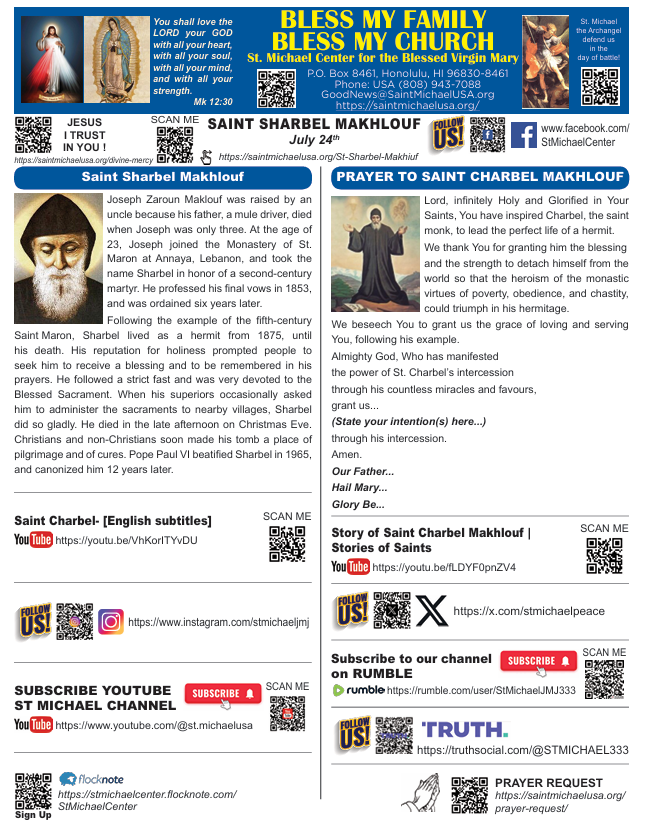
 0724 St Sharbel Makhiuf 1p LETTER 20250705
 St Sharbel Makhiuf – 24th July
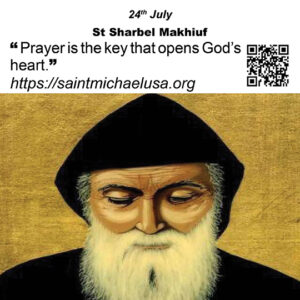
“Prayer is the key that opens God’s heart.”
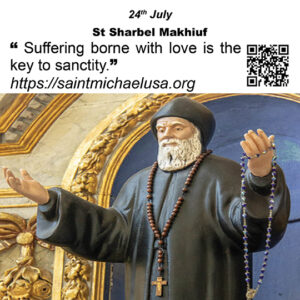
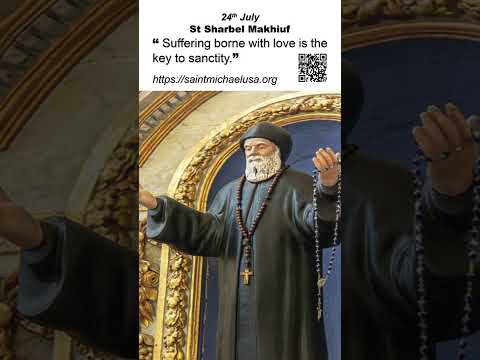
“Suffering borne with love is the key to sanctity.”
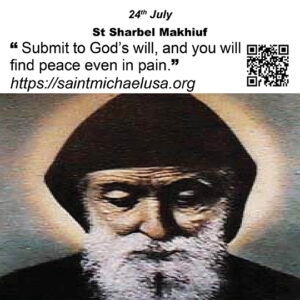
“Submit to God’s will, and you will find peace even in pain.”
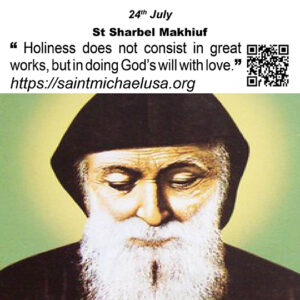
“Holiness does not consist in great works, but in doing God’s will with love.”
 https://www.youtube.com/embed/xibXxKhv_fo
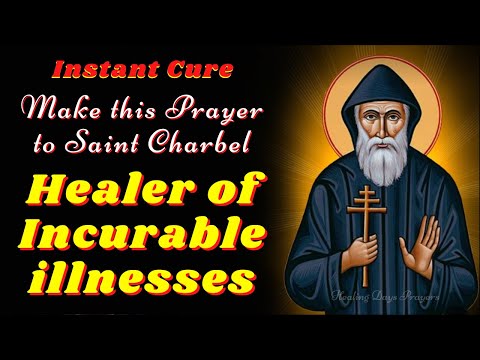
PRAYER TO SAINT CHARBEL MAKHLOUF
Lord, infinitely Holy and Glorified in Your Saints,
You have inspired Charbel, the saint monk,
to lead the perfect life of a hermit.
We thank You for granting him the blessing
and the strength to detach himself from the world
so that the heroism of the monastic virtues of poverty,
obedience, and chastity,
could triumph in his hermitage.
We beseech You to grant us the grace of loving and serving You,
following his example.
Almighty God, Who has manifested
the power of St. Charbel’s intercession
through his countless miracles and favours,
grant us…
(State your intention(s) here…)
through his intercession.
Amen.
Our Father…
Hail Mary…
Glory Be…
PRAYERS
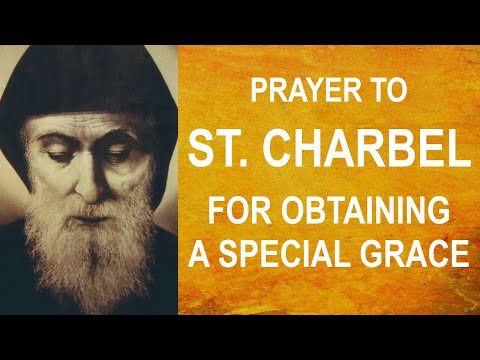
Prayer for Obtaining a Special Grace
O Lord, infinitely holy and glorified in your saints, you inspired the holy monk and hermit Saint Sharbel to live and die in the way of Jesus Christ and gave him the strength to detach himself from the world in order to make the monastic virtues triumph in his hermitage.
We implore you to bestow upon us the grace to love you and to serve you by following his example.
Almighty God, who manifested the power of Saint Sharbel’s intercession by numerous miracles and favors, grant us, through his intercession, this grace (state your intention). Amen.
Miraculous Prayer to Saint Charbel:
O God infinitely Holy and glorified in Your saints, who inspired the monk and hermit St. Charbel to live and die in a perfect likeness to JESUS, giving him the strength to detach from the world in order to live fully, in his hermitage, the monastic virtues of poverty, obedience and chastity, we beg You to grant us the grace to love You and serve You as he did.
(Mention your petition…)
Lord Almighty, who has demonstrated the power of the intercession of St. Charbel by many miracles and favors, grant our volunteers the grace of living a beautiful mission and returning home firm in faith, filled with fiery charity. We beseech You by his intercession.
O Charbel, Saint of Great Wonders, from whose miraculous body emanates the fragrance of heaven, come to my assistance and, if it be for the glory of God and the good of my soul, obtain from God for me the grace of which I am in need… (state your intention). Amen.
Saint Charbel Makhlouf,
pray for us!
Prayer to Obtain Graces
Lord, infinitely holy and glorified in Your saints, You have inspired Charbel, the saint monk, to lead the perfect life of a hermit. We thank You for granting him the blessing and the strength to detach himself from the world so that the heroism of the monastic virtues of poverty, chastity, and obedience might triumph in his hermitage. We beseech You to grant us the grace of loving and serving You, following his example. Almighty God, who have manifested the power of Saint Charbel’s intercession through his countless miracles and favors, grant us this grace (here mention your intention) which we request from You through his intercession. Amen.
Prayer to Saint Charbel
O Saint Charbel, man of God and friend of humanity,
You who dedicated your life to prayer, solitude and the love of Christ,
We come to you today with faith and hope,
Supplicating your intercession to our Lord.
Saint Charbel, you who have healed so many broken hearts,
And brought peace to those who were despairing,
Listen to our prayers and obtain for us the graces we need:
(specify your intention here).
O glorious hermit,
Fill our hearts with the light of faith,
And help us to follow the path of holiness.
Help us to accept God’s will with love and humility,
And to bear witness to his goodness in our lives.
Saint Charbel, heal our physical and spiritual illnesses,
And protect us from visible and invisible dangers.
Thank you for your constant intercession and benevolent presence,
We promise to spread your name and bear witness to your miracles,
Living in the love of Christ our Saviour.
Amen.
Prayer for True Conversion
O Lord, infinitely holy and glorified in your saints, you inspired Saint Sharbel, the saintly monk, to lead the perfect life of a hermit. We thank you for having granted him the blessing and the strength to detach himself from the world so that the heroism of the monastic virtues of poverty, obedience, and chastity might triumph in his hermitage.
O God, for the blessing of all people you have deigned to choose Saint Sharbel as a model of all virtues, and you have converted many souls through his works and example.
We now ask you to grant by his merits and intercession that we may be truly converted, renounce all sins and sinful desire, and become more and more pleasing to you by the practice of true virtue, through Jesus Christ, our Lord. Amen.
NOVENA TO SAINT CHARBEL
Day One
O Sharbel, saint of great wonders, from whose miraculous body emanates the fragrance of heaven, come to my assistance and, if it be for the glory of God and the good of my soul, obtain from God for me the grace of which I am in need… (state your intention). Amen.
Saint Sharbel, pray for me.
O Lord, who granted Saint Sharbel the grace of faith, I beseech you through his merits and intercession to grant me that same grace. Then I shall live according to your commandments and Gospel. To you be glory, forever. Amen.
Our Father, Hail Mary, and Glory be.
Day Two
O Saint Sharbel, witness of monastic life who experienced suffering, our Lord Jesus has made of you a shining beacon. I turn to you and ask through your intercession the grace of… (state your intention). I put my hope in you. Amen.
Saint Sharbel, vessel of sweet fragrance, pray for me.
O Merciful God, who honored Saint Sharbel through the working of great miracles, have mercy on me and grant me what I ask through his intercession. To you be glory, forever. Amen.
Our Father, Hail Mary, and Glory be.
Day Three
O beloved Saint Sharbel, you who shine like a bright star in the firmament of the Church, be a light for my way and strengthen my hope. From you I ask for the grace of… (state your intention). Ask it for me from the crucified Jesus whom you unceasingly adore. Amen.
Saint Sharbel, model of patience and silence, pray for me.
O my Lord Jesus Christ, who sanctified Saint Sharbel, your intimate friend, through austerity, mortification, and the carrying of the cross, grant through his intercession that I may bear the difficulties of life with patience and total surrender to your Divine Will. Then I shall give thanks to you, forever. Amen.
Our Father, Hail Mary, and Glory be.
Day Four
O compassionate father, Saint Sharbel, I turn to you. Confidence in your help fills my heart. Through the power of your intercession with God, I await the grace for which I ask… (state your intention). Show me once more your power and compassion. Amen.
Saint Sharbel, garden of virtues, pray for me.
O my God, who granted Saint Sharbel the grace of imitating you in all virtues, grant that I too, with his help, may grow in the Christian virtues. Have mercy on me. Have pity on me that I may praise you, forever. Amen.
Our Father, Hail Mary, and Glory be.
Day Five
O saint Sharbel, beloved by God, enlighten me, help me, and teach me to do what pleases him. Hasten, O God, to help me. O compassionate one, I beseech you to ask from God for me this grace… (state your intention). Amen.
Saint Sharbel, friend of the Crucified, pray for me.
O my God, I raise my eyes to you. Hear my petition through the intercession of Saint Sharbel. Deliver my heart from misery. Grant me peace. Calm my troubled soul. To you be praise, forever. Amen.
Our Father, Hail Mary, and Glory be.
Day Six
O Saint Sharbel, powerful intercessor, I ask you to obtain for me the grace of which I am in need… (state your intention). One single word from you on my behalf suffices to obtain for me the mercy of Jesus, his forgiveness, and an answer to my prayer. Amen.
Saint Sharbel, joy of heaven and earth, pray for me.
O Lord, who chose Saint Sharbel to be our advocate before your Divine Majesty, grant me this grace through his intercession. Then, with him, I shall glorify you, forever. Amen.
Our Father, Hail Mary, and Glory be.
Day Seven
O saint Sharbel, lover of all and helper of the needy, I firmly hope in your intercession before God. Obtain from him for me this grace of which I am most in need… (state your intention). Amen.
Saint Sharbel, star that guides the straying, pray for me.
O my God, my numerous sins prevent graces from reaching me. Grant me the grace to repent of them. Answer me through the intercession of Saint Sharbel. Bring Joy back to my sorrowful heart by granting my petition, O Sea of graces. To you be glory and thanksgiving, forever. Amen.
Our Father, Hail Mary, and Glory be.
Day Eight
O Saint Sharbel, when I reflect and see you kneeling for prayer, or fasting, or living in austerity, or immersed in conversing intimately with God, my hope and my faith in you increase. Help me, I beg of you, to receive from God the grace for which I am asking… (state your intention). Amen.
Saint Sharbel, inebriated with God, Pray for me.
O most sweet Jesus, who drew towards evangelical perfection Saint Sharbel who loved you, I beseech you to grant me the grace to spend the rest of my life according to your will. I love you, O God of my salvation. Amen.
Our Father, Hail Mary, and Glory be.
Day Nine
O father, Saint Sharbel, here I am at the end of this Novena. My heart is refreshed whenever I speak with you. I have absolute hope that I shall obtain from Jesus the grace which I asked through your intercession. I repent of my sins and promise never to commit them again. I ask you to obtain the fulfillment of my request… (state your intention). Amen.
Saint Sharbel, crowned with glory, pray for me.
O Lord, who listened to the prayer of Saint Sharbel and granted him the grace of being united with you, have mercy on me in my time of distress and save me from the temptations which I cannot bear. To you be glory, praise, and thanksgiving, forever. Amen.
Our Father, Hail Mary, and Glory be.
Saint Sharbel Makhlouf July 24th
Son of a mule driver. Raised by an uncle who opposed the boy’s youthful piety. The boy’s favorite book was Thomas a Kempis’s The Imitation of Christ. At age 23 he snuck away to join the Baladite monastery of Saint Maron at Annaya where he took the name Charbel in memory of a 2nd century martyr. Professed his solemn vows in 1853. Ordained in 1859, becoming a heiromonk.
He lived as a model monk, but dreamed of living like the ancient desert fathers. Hermit from 1875 until his death 23 years later, living on the bare minimums of everything. Gained a reputation for holiness, and was much sought for counsel and blessing. He had a great personal devotion to the Blessed Sacrament, and was known to levitate during his prayers. Briefly paralyzed for unknown reasons just before his death.
Several post-mortem miracles attributed him, including periods in 1927 and 1950 when a bloody “sweat” flowed from his corpse. His tomb has become a place of pilgrimage for Lebanese and non-Lebanese, Christian and non-Christian alike.
Born, 8 May 1828 at Beka-Kafra, Lebanon as Joseph Zaroun Makhlouf
Died, 24 December 1898 at Annaya of natural causes
Saint Sharbel Makhlouf (also spelled Charbel Makhlouf) was a Maronite monk and priest from Lebanon, known for his holiness, ascetic life, and numerous miracles. Below is a concise overview based on available information:
Life and Background
- Birth and Early Life: Born Youssef Antoun Makhlouf on May 8, 1828, in Bekaa Kafra, Lebanon, a mountain village at a high elevation. He was the fifth child in a poor but devout Christian family. His father, a mule driver, died when Youssef was three, and he was raised by his mother and uncle. From a young age, Youssef was deeply pious, often praying in a grotto with an icon of the Virgin Mary, earning him the nickname “the Saint” among villagers.en.wikipedia.orgfamilyofsaintsharbel.org
- Monastic Life: In 1851, at age 23, he joined the Lebanese Maronite Order at the Monastery of Our Lady in Mayfouq, taking the name Sharbel after a second-century martyr. He professed his monastic vows of chastity, poverty, and obedience in 1853 at the Monastery of Saint Maron in Annaya. He studied theology under Saint Nimatullah Kassab Al-Hardini and was ordained a priest in 1859.en.wikipedia.orgmycatholic.life
- Hermit Years: From 1875 until his death, Sharbel lived as a hermit at the Hermitage of Saints Peter and Paul near the Monastery of Saint Maron. His life was marked by strict asceticism, contemplative silence, manual labor, and devotion to the Eucharist. A notable miracle during his life involved a lamp filled with water that burned as if it contained oil, seen as a divine sign approving his hermit vocation.mycatholic.lifecatholicmom.com
- Death: Sharbel suffered a stroke on December 16, 1898, while celebrating the Divine Liturgy and died on Christmas Eve, December 24, 1898. He was buried at the Monastery of Saint Maron in Annaya.familyofsaintsharbel.org
Miracles and Legacy
- Posthumous Miracles: After his death, light was seen emanating from his tomb, and his body was found incorrupt, exuding sweat and blood for decades, a phenomenon that drew pilgrims. Numerous miracles, including healings of incurable conditions like blindness and paralysis, have been attributed to his intercession, with some sources claiming over 29,000 documented miracles, second only to the Virgin Mary among saints.catholicmom.comdeepertruthcatholics.com
- Notable Miracles: Examples include the 1967 healing of Miriam Awad from throat cancer, which was pivotal for his canonization, and the 1993 healing of Nohad El Shami from partial paralysis after a dream where Sharbel appeared to her.familyofsaintsharbel.orgcatholicreadings.org
- Canonization: Beatified by Pope Paul VI in 1965 and canonized in 1977, Sharbel is celebrated for his ability to unite Christians, Muslims, and Druze in Lebanon. His feast day is July 24 in the Latin Church and the third Sunday of July in the Maronite Church.en.wikipedia.orgcatholicreadings.org
- Patronage and Influence: Known as the “Miracle Monk of Lebanon,” he is the patron saint of Lebanon and those suffering in body and soul. His tomb at the Monastery of Saint Maron in Annaya attracts millions, including non-Christians, and his intercession is sought globally. A shrine dedicated to him exists in Saint Patrick’s Cathedral, New York.saintsharbelnj.orgcatholicmom.com
Cultural and Spiritual Significance
- Sharbel is often called the “Padre Pio of the East” due to his mystic life and miracles. His life exemplifies the unity of the Catholic Church’s Eastern and Western traditions, as noted by Pope John Paul II’s metaphor of the Church having “two lungs.”connection.newmanministry.com
- His devotion to prayer, simplicity, and the Eucharist continues to inspire, with relics and medals distributed worldwide. Devotees often gather on the 22nd of each month to pray at his shrine in Annaya


Stay connected — subscribe today
https://www.youtube.com/@st.michaelusa
SIGN UP SO YOU CAN GET A BLESSING !
https://stmichaelcenter.flocknote.com/StMichaelCenter
FOLLOW US ON FACEBOOK !

https://www.facebook.com/StMichaelCenter/
MAKE A DONATION SUPPORT YOUTH & ACTIVITIES